Power Bank Wattage and Fast Charging: What Your Phone Actually Needs
Wattage determines charging speed through the equation watts = volts × amps. Fast charging protocols like USB-PD and Qualcomm Quick Charge negotiate higher voltages between phone and power bank. Match your power bank's wattage to your phone's maximum charging capacity—oversized is safe, undersized wastes time. Quality power banks list full specs so you pick the right fast charging power bank for Kenya's daily demands.
See everything powerbanks.africa can do for you.
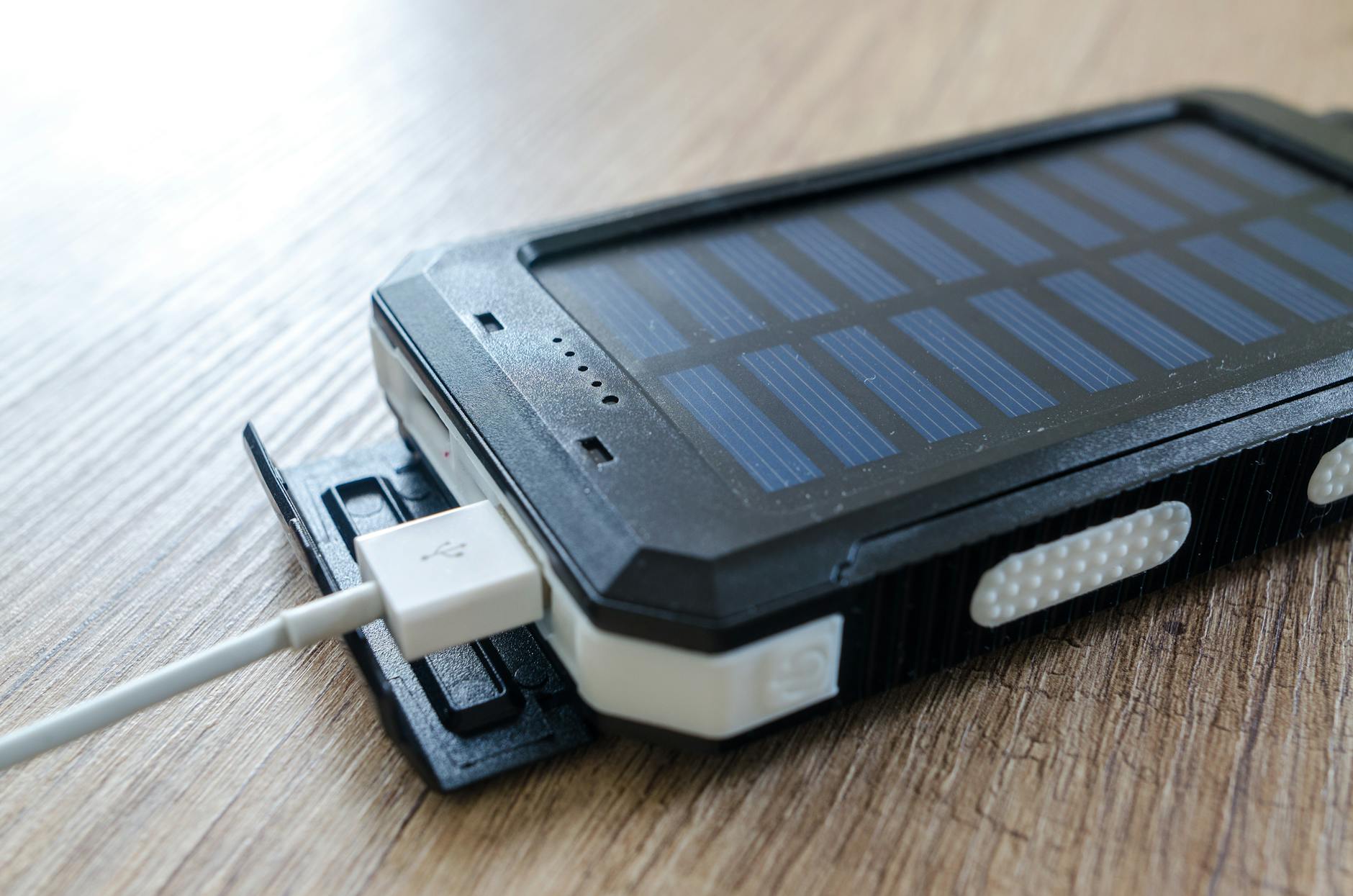
If you have ever stared at a power bank listing and wondered what "18W," "65W," or "100W" actually means for your phone, you are not alone. Wattage numbers are everywhere on spec sheets, but most buyers never get a clear explanation of what those numbers do in practice. This post walks you through exactly what wattage means, how fast charging works, and how to pick the right power bank for how you actually live and work in Kenya.
This article is part of our complete guide: Power Banks Best Prices.
Watts, Amps, and Volts: The Specs That Matter
How wattage is calculated and why it matters
Every charging spec comes down to one simple equation: watts equal volts multiplied by amps. A charger pushing 5 volts at 2 amps delivers 10 watts of power, while one pushing 9 volts at 3 amps delivers 27 watts. That difference in wattage is what determines how quickly energy moves into your phone's battery. The higher the wattage, the more power flows per second, and the shorter your charging time. Understanding this relationship helps you decode any spec sheet rather than guessing.
Why amp ratings alone mislead you
Many older power banks advertise only their amp output, something like "2.4A," without mentioning voltage. At a standard 5 volts, 2.4 amps gives you 12 watts, which is slow by today's standards. A newer device might advertise the same 2.4 amps but push it at 9 or 12 volts, producing 21 or 28 watts instead. Comparing amp ratings across devices without knowing the voltage is like comparing car speeds using only gear numbers. Always look for the watt figure, or calculate it yourself from the volts and amps listed.
Finding the wattage on a spec sheet
Most quality power banks list their output specs in a small table on the box or product page, and the row you want is the one showing the highest voltage and amperage combination. If you see an output row that reads "9V/2A," that device can deliver 18 watts to a compatible phone. Some spec sheets list multiple rows for different ports or different charging modes, so find the highest one that matches a port your phone cable actually uses. If a power bank only lists "5V/2A" across all ports, that device tops out at 10 watts and will not fast charge anything. At powerbanks.africa, the product pages include full spec tables so you can find these numbers before you buy.
What Fast Charging Really Means
Standard versus fast charging voltage
Standard USB charging operates at 5 volts, which was designed in an era when phones had much smaller batteries. A 5V/1A output gives you just 5 watts, which might take four hours or more to fill a modern 5000mAh phone battery. Fast charging protocols break past this ceiling by negotiating a higher voltage between the charger and the device. Your phone's charging controller and the power bank's output controller communicate to agree on the highest safe wattage both can handle. This negotiation is why plugging a fast charging-capable phone into a standard 5V charger results in slow, ordinary charging.
Common fast charging standards
The three standards you will encounter most often are USB Power Delivery (USB-PD), Qualcomm Quick Charge (QC), and the proprietary systems used by brands like Huawei (SuperCharge) and OPPO (VOOC). USB-PD is the most universal and is the standard used by iPhones, most modern Android phones, and laptops that charge over USB-C. Qualcomm Quick Charge is common on mid-range Android phones powered by Snapdragon processors, particularly Tecno, Infinix, and Samsung devices popular across Kenya. Proprietary systems tend to deliver the very highest wattages, but they only work when both the charger and the phone are from the same brand ecosystem. Knowing which standard your phone supports helps you shop for a compatible power bank rather than one that looks fast on paper but delivers standard speeds on your specific device.
Why not all power banks support every standard
Building support for multiple fast charging protocols into a power bank requires dedicated charging controller chips, which add cost and complexity. Budget power banks often skip this investment and deliver only 5V/2A regardless of what your phone requests. A quality power bank will clearly list which protocols its ports support, for example "USB-PD 3.0, QC 3.0, AFC," so you know exactly what you are getting. Buying a power bank without confirmed protocol support for your phone means you may never see the fast charging speeds you paid for. This is one of the reasons that clear, honest specs matter as much as the wattage number itself.
Matching Power Bank Wattage to Your Phone
Checking your phone's maximum charging wattage
The simplest place to find your phone's charging limit is the manual or the manufacturer's spec page online, where it is usually listed under "charging" in the connectivity section. You can also check the charger that came in the box, since the adapter's output wattage matches what the phone was designed to accept. Some Android phones also display live charging wattage in the battery settings or developer options, which lets you confirm in real time whether a power bank is delivering its advertised speed. If your phone shipped with an 18W charger, that is your ceiling, and a 65W power bank will simply deliver 18W to that phone. Knowing your phone's limit helps you avoid paying for wattage you cannot use, or underpaying for a power bank that bottlenecks your device.
Why oversized wattage is safe but undersized wattage costs you time
A phone will never draw more wattage than it is designed to accept, so connecting a 100W power bank to a phone that tops out at 25W is completely safe. The power bank just supplies what the phone requests and throttles everything else. The problem runs in the other direction: if your phone can accept 45W but your power bank only outputs 18W, you get slower charging every single time you use it. Over a day of heavy use in Nairobi, that gap can mean a phone that never fully recovers between meetings or commutes. Getting the wattage right means matching or slightly exceeding your phone's maximum, not hunting for the highest number on the shelf.
Real-world charging times at different wattages
A typical smartphone with a 5000mAh battery takes roughly two hours and fifteen minutes to charge from flat at 30W, about seventy-five minutes at 65W, and as little as fifty minutes at 100W. Those numbers shrink further if you are only topping up from 20 percent. For tablets or larger devices like a Samsung Galaxy Tab with a 10090mAh battery, the difference between 30W and 65W is even more noticeable, often cutting charge time nearly in half. For most Kenyan daily users, a 30W to 65W power bank hits the sweet spot of charging speed, size, and cost. Power users carrying laptops and multiple devices will genuinely benefit from 65W and above, since many thin-and-light laptops accept USB-PD charging in that range.
The Heat Factor: Why Wattage Matters for Durability
How high wattage generates heat
More watts flowing through a circuit means more energy conversion happening in a small space, and some of that energy inevitably becomes heat. At 5W or 10W this barely matters, but at 65W or 100W, thermal management becomes a real engineering concern. Cheap power banks at high wattages often run hot enough to feel uncomfortable to hold, and sustained heat shortens both the power bank's battery and your phone's battery over time. Heat is also the most common reason a fast charging session unexpectedly slows down, because the device's protection circuitry reduces wattage to cool things down. Good thermal management is invisible when it works, but you notice its absence immediately.
Why multi-protection features become essential at high wattage
A well-built power bank running at 65W or above needs several layers of protection working together: temperature monitoring to detect overheating, over-voltage protection to prevent spikes from damaging your phone, over-current protection to stop runaway current draw, and short-circuit protection in case of cable faults. These features are not marketing checkboxes; they are the circuits that keep both your power bank and your phone safe during the highest-demand charging sessions. Without them, a single power spike during fast charging can damage a phone's charging controller, a repair that costs more than the power bank itself. The multi-protection features built into the power banks we stock at powerbanks.africa are specifically there to make high-wattage charging routine rather than risky. When you see those features listed on a spec sheet, treat them as a minimum requirement, not a bonus.
Why A-grade batteries handle fast charging better
The battery cells inside a power bank are not all created equal. A-grade cells are manufactured to tighter tolerances, meaning their internal resistance is lower and more consistent, which allows them to deliver high currents without excessive heat buildup. Lower-grade cells, often found in budget power banks sold without verified certification, have higher internal resistance and generate significantly more heat under the same load. Over dozens of fast-charging cycles, that extra heat degrades the cells faster, shrinking the power bank's effective capacity well before its expected lifespan. Choosing a power bank built with A-grade batteries means you are not just buying wattage; you are buying reliability over the long term.
Choosing the Right Wattage for Kenyan Use
Practical wattage ranges for everyday versus heavy users
For someone who charges one phone daily and occasionally needs a top-up away from a socket, a power bank in the 18W to 30W range is practical and portable. If you carry an Android flagship like a Samsung Galaxy S-series or a recent Tecno Camon that supports 33W or 45W charging, stepping up to a 45W or 65W power bank closes the gap between power bank charging and wall socket charging. Heavy users managing a phone, wireless earbuds, and a tablet simultaneously should consider 65W and above, since many of these power banks also include multiple output ports that can charge two or three devices at once. Across Kenya, where power outages and load shedding can leave you without wall power for hours, having a power bank that charges your primary device quickly is genuinely useful rather than just a convenience. Match the wattage to your actual device lineup, not to the biggest number available.
Balancing fast charging with portability and heat
Higher wattage output usually requires a larger power bank, both to house bigger battery cells and to accommodate better thermal management hardware. A 100W power bank is often brick-sized and better suited to a bag than a pocket. The 50000mAh LED light power banks with built-in cables that we carry are a good example of high-capacity devices designed for situations where portability is secondary to runtime, such as camping trips, travel, or use during extended outages. For daily carry in a jacket pocket or small bag, a 10000mAh to 20000mAh unit with 30W to 45W output often strikes the best balance. Think about where and how you will carry the device, not just how fast it will charge your phone.
Why certification ensures safe fast charging
CE, FCC, and RoHS certification are not just stickers. They represent third-party laboratory testing that confirms a device meets specific safety and electromagnetic standards before it reaches you. At high wattages, the risk of unsafe voltage spikes, electromagnetic interference, and hazardous materials in the cells increases if a manufacturer cuts corners. A CE/FCC/RoHS certified power bank has been tested against those scenarios, which means the multi-protection features actually perform as advertised under realistic conditions. For buyers across Kenya, certification is one of the clearest ways to separate a power bank that will keep working reliably from one that may fail or cause damage after a few months of real use.
Getting your wattage choice right is one of those decisions that pays off quietly every day: your phone charges before your next meeting, your devices stay healthy over years of use, and you are not standing next to a wall socket more than you need to be. Browse our full range of certified, A-grade power banks at powerbanks.africa, where you can filter by output wattage and charging protocol to find exactly what matches your phone and your lifestyle.
See everything powerbanks.africa can do for you.
Visit powerbanks.africa →