Power Bank Buying Guide: What Capacity Do You Actually Need?
Choose power bank capacity based on daily usage patterns and efficiency reality. Small 10000-20000mAh units suit office workers and casual users needing one to two charges. Heavy users, field workers, and travelers benefit from 30000-50000mAh capacity delivering multiple charges and charging multiple devices simultaneously.
See everything powerbanks.africa can do for you.
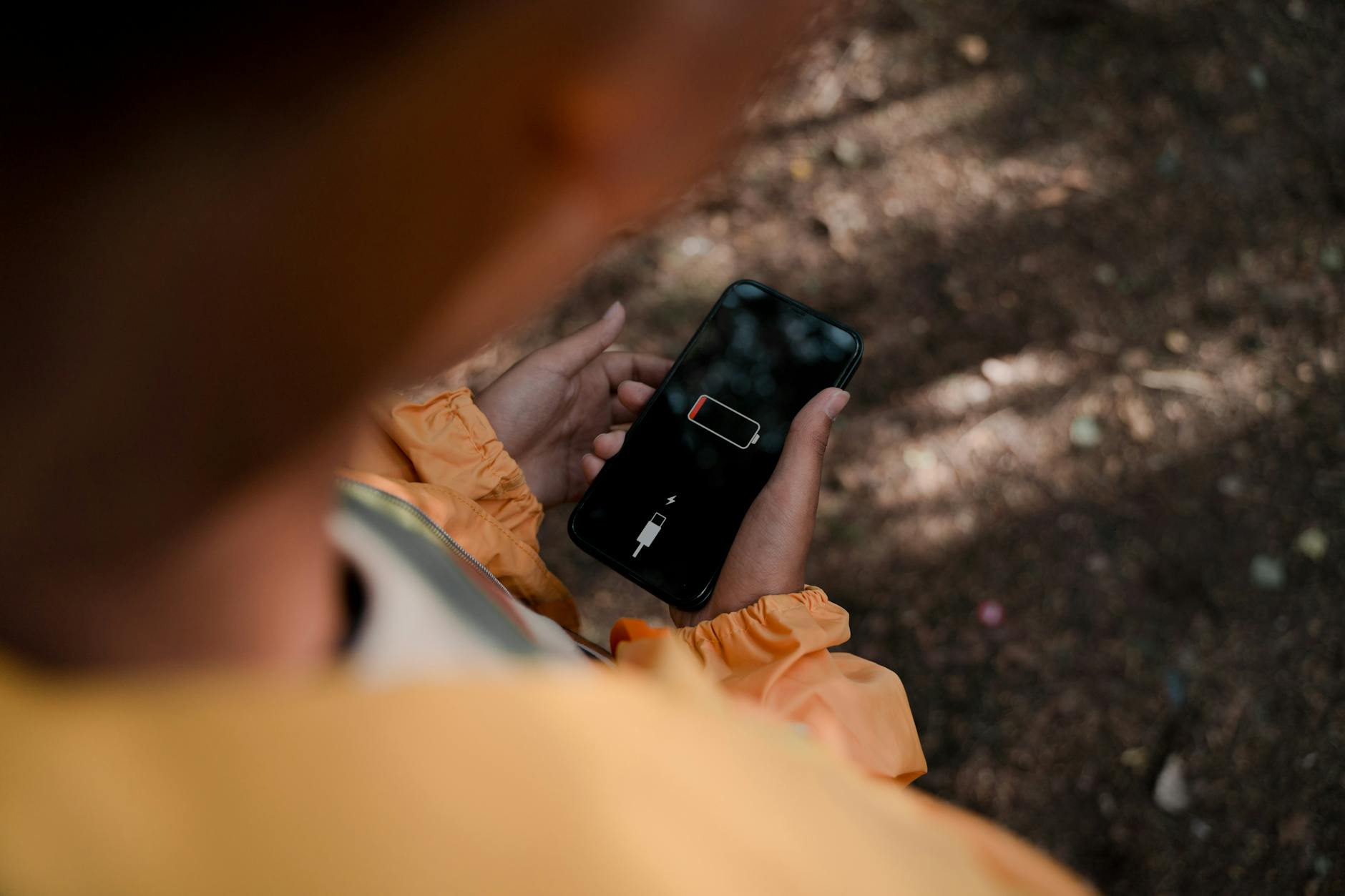
If you have ever stood in a shop or scrolled through a product listing wondering whether you need a 10000mAh power bank or a 50000mAh one, you are not alone. Capacity numbers can feel abstract until you understand what they actually mean for your daily life. This guide breaks it down clearly so you can buy the right power bank once and not regret it a week later.
This article is part of our complete guide: Power Banks Best Prices.
Understanding Power Bank Capacity: mAh Explained
Milliampere-hour, written as mAh, is simply a measure of how much electrical energy a battery can store. Think of it like a water tank: a larger tank holds more water, and a larger mAh rating stores more energy. The higher the number, the more charging potential the power bank carries. That said, the number alone does not tell the whole story, and understanding it properly saves you from a frustrating purchase.
A common misconception is that a 20000mAh power bank will fully charge a phone with a 5000mAh battery exactly four times. In practice, energy conversion from the power bank's battery to your phone's battery is never perfectly efficient. Heat, voltage conversion, and cable resistance all eat into the available capacity. Most power banks deliver roughly 60 to 70 percent of their rated capacity as usable charge, so that 20000mAh unit realistically delivers closer to 12000 to 14000mAh to your device.
To estimate how many times a power bank will charge your specific phone, take the power bank's rated capacity, multiply it by about 0.65, and then divide by your phone's battery size. For example, a 10000mAh power bank at 65 percent efficiency gives you roughly 6500mAh of usable energy. A Samsung Galaxy A54, which has a 5000mAh battery, would get around one full charge from that unit. This simple calculation is far more useful than trusting the headline number on the box.
The gap between advertised capacity and usable capacity is not a scam; it is physics. Manufacturers are required to state the raw cell capacity, not the output capacity after conversion losses. Reputable brands are transparent about this distinction, while lower quality units sometimes inflate their ratings on top of the conversion loss. Buying from a trusted source with certifications gives you a much more accurate picture of what you are actually getting.
Small Capacity Power Banks: 10000mAh to 20000mAh
If you are a professional who commutes in Nairobi, works in an office, and uses your phone for calls, messages, and occasional browsing, a power bank in the 10000mAh to 20000mAh range is almost certainly all you need. These units are lightweight, easy to slip into a handbag or laptop bag, and charge quickly compared to their larger counterparts. They are built for people who need a safety net, not a full power station. Most users in this category run into trouble maybe once or twice a week, not every single day.
A good 10000mAh power bank will deliver one full charge to most modern smartphones, which is enough to rescue a dying battery during a long meeting or a day out in the Nairobi CBD. A 20000mAh unit stretches that to roughly two full charges, giving you added breathing room. For the average casual user, that is genuinely sufficient. Carrying more capacity than you use regularly just adds unnecessary weight to your bag.
Portability is where smaller power banks win outright. A 10000mAh unit typically weighs between 180 and 230 grams, which means you barely notice it in a pocket or bag. This matters a great deal if you commute by matatu or walk significant distances during your day. Lighter accessories are accessories you actually carry, and a power bank left at home because it was too bulky helps nobody. For day trips to places like Karura Forest or a weekend visit upcountry, this size is the sweet spot.
Common users who get the most value here include office workers on eight-hour shifts, students on campus, and anyone running errands around town. If your routine takes you away from a charger for six to ten hours at a stretch, this range covers you without overcomplicating your bag. Think of it as your everyday emergency reserve, compact and reliable.
Large Capacity Power Banks: 30000mAh to 50000mAh
Heavy power users, field workers, and anyone who regularly travels to areas with unreliable electricity in Kenya will find that a 30000mAh to 50000mAh power bank changes their daily experience significantly. These units can deliver four to six full charges to a typical smartphone, and that kind of reserve genuinely reduces anxiety about running out of power. Construction site supervisors, journalists working on location, and small business owners managing deliveries across counties are exactly the people this capacity is built for. One charge of the power bank can realistically carry you through two or three full days of heavy use.
Larger power banks also open up the ability to charge tablets, wireless earbuds, and smartwatches alongside your phone. A 50000mAh unit with multiple USB ports lets a family of four each top up their devices on a long road trip to Mombasa or Kisumu without anyone fighting over the single port. That flexibility is genuinely practical, not just a marketing point. When you are away from a socket for an extended period, having one device that handles everything is far simpler than juggling multiple smaller ones.
Our 50000mAh LED light power banks with built-in cables are a particularly useful option here because they combine high capacity with features that matter in real situations. The built-in LED light is not a gimmick; it is genuinely helpful during power cuts or when working in poorly lit outdoor environments. Built-in cables remove the frustration of searching for the right cord at an inconvenient moment. These added features make a large power bank genuinely multifunctional rather than just a bigger battery.
Extended travel is where this capacity range earns its price. If you are taking an overnight bus to western Kenya or spending a week at a site with no reliable power, running out of charge on your phone can mean losing navigation, communication, and mobile money access all at once. A 50000mAh power bank in your bag means you treat electricity as a convenience rather than a constraint.
Your Lifestyle Determines Capacity, Not Trends
The single most useful question you can ask yourself is how many hours per day you spend away from a power outlet. If the honest answer is four to six hours, a 10000mAh power bank is more than enough. If the answer is twelve or more hours, or if those hours include heavy navigation, video calls, or hotspot use, you need something substantially larger. Your actual habits are a far better guide than whatever model happens to be popular right now. Buying based on trends rather than your real routine is how people end up with a power bank they find too heavy to carry or too small to trust.
Your work environment plays a significant role in this decision. An accountant working from a Nairobi office building has access to sockets throughout the day and needs a power bank mainly for commutes and occasional outages. A tour guide taking visitors through Amboseli for three days has a completely different set of needs, where the power bank might be the only charging source for an extended stretch. Outdoor and remote work demands fundamentally more capacity than indoor office work. Knowing which category your daily life falls into narrows the decision down considerably.
Travel frequency and trip length are the next factors to weigh honestly. Someone who travels upcountry once a month for a weekend can manage with a mid-range unit, while someone who regularly travels to remote areas for work needs to think in terms of days, not hours, of battery backup. The longer and more remote the trip, the more you need to treat your power bank as a primary power source rather than a backup. That shift in thinking changes the capacity you should be looking at.
Finally, count the devices. If you only ever charge your phone, capacity calculations are straightforward. If you also carry wireless earbuds, a smartwatch, or a tablet, you need to add up all those battery sizes and factor them into your estimate. Families sharing a single power bank on a road trip should add the battery capacities of every device that will be plugged in. Running that simple total through the 65 percent efficiency formula gives you a much more grounded sense of the size you actually need.
Quality Matters More Than Raw Capacity
A power bank built with A-grade battery cells will charge your phone to exactly the capacity it promises, day after day, for a long time. Lower-grade cells lose capacity faster, sometimes delivering noticeably fewer charges within just a few months of regular use. The degradation of cheap cells is not always visible from the outside, which is why a unit that seems like good value can turn into a disappointment within half a year. Consistent, reliable performance over the long term is what an A-grade battery actually delivers.
Multi-protection features are the part of a power bank that most buyers overlook because they are invisible during normal use. Overcharge protection stops the charging process when your device is full, preventing battery damage over time. Short-circuit protection cuts power instantly if something goes wrong with the connection. Temperature controls prevent the power bank from getting dangerously hot during charging. These features are not luxury additions; they protect both the power bank itself and the device you are charging.
Certifications like CE, FCC, and RoHS are independent, third-party confirmations that a product meets specific safety and environmental standards. CE certification signals compliance with European safety requirements, FCC indicates it has been tested for electromagnetic compatibility, and RoHS confirms the unit is free from hazardous materials. When you see these marks on a power bank, it means the manufacturer submitted their product for external testing rather than just printing their own claims on the box. A one-year warranty alongside these certifications means the seller stands behind the product with something concrete.
The practical conclusion from all of this is that a well-built 20000mAh power bank will outperform a cheap 50000mAh one in every meaningful way. The cheap unit may charge your phone fewer times than its label suggests, lose capacity faster, and potentially cause harm to your devices. Spending slightly more on a certified, warranted product with quality cells protects both your money and your phone. Capacity is just one number; the quality behind it determines whether that number is real.
Making Your Decision: Practical Questions to Ask
Start with time: how many hours are you typically away from a power outlet on a regular working day? If the answer is under eight hours and your phone usage is moderate, a 10000mAh to 20000mAh power bank handles your needs comfortably. If you regularly hit twelve hours or more, or if you frequently lose power access without warning, move up to the 30000mAh range or above. Being honest about your average day, rather than your worst day, usually leads to the right choice.
Next, think about the purpose the power bank will serve most often. A power bank for daily work commutes is used differently from one kept in a bag for travel emergencies, and that affects which features matter most to you. If you want something that doubles as a light source or eliminates the need to carry cables separately, a unit with built-in cables and an LED light is a genuinely practical upgrade. If you just want the smallest, lightest backup possible for occasional use, a compact unit with a single port is cleaner and easier to carry.
Consider how many devices you charge regularly and whether you ever need to charge two or more at the same time. A single USB-A port is fine for solo phone charging, but if you want to charge your phone and earbuds simultaneously, or share the power bank with a travel companion, multiple output ports become important. Adding up the battery sizes of all your regular devices gives you a floor for the capacity you need. This number is more reliable than any general recommendation.
Finally, set a realistic budget and pair it with your warranty expectations. A power bank is an accessory you use almost every day, so it is worth treating it as an investment rather than the cheapest option available. A one-year warranty is a meaningful signal that the manufacturer expects their product to last, and it gives you a clear path if something goes wrong. Balancing upfront cost against expected lifespan often makes the slightly more expensive, better-built option the more economical choice over time.
Choosing the right capacity power bank is really just a matter of knowing your own habits and matching them to a well-built product. Whether you need a compact 10000mAh unit for your Nairobi commute or a 50000mAh workhorse for extended travel across Kenya, the right answer is the one that fits your actual life. If you want to browse options or ask a question before buying, visit us at Mountain Mall on Thika Road or shop online with delivery available anywhere in Kenya.
See everything powerbanks.africa can do for you.
Visit powerbanks.africa →