Extend Your Power Bank's Lifespan: Charging & Storage Tips
Extend your power bank's lifespan by adopting simple charging and storage habits. Avoid deep discharges, unplug when fully charged, use certified chargers, minimize fast charging heat, and store at 15-25°C in 40-60% charge state. Proper maintenance doubles battery life and ensures reliability for your durable power bank in Nairobi.
See everything powerbanks.africa can do for you.
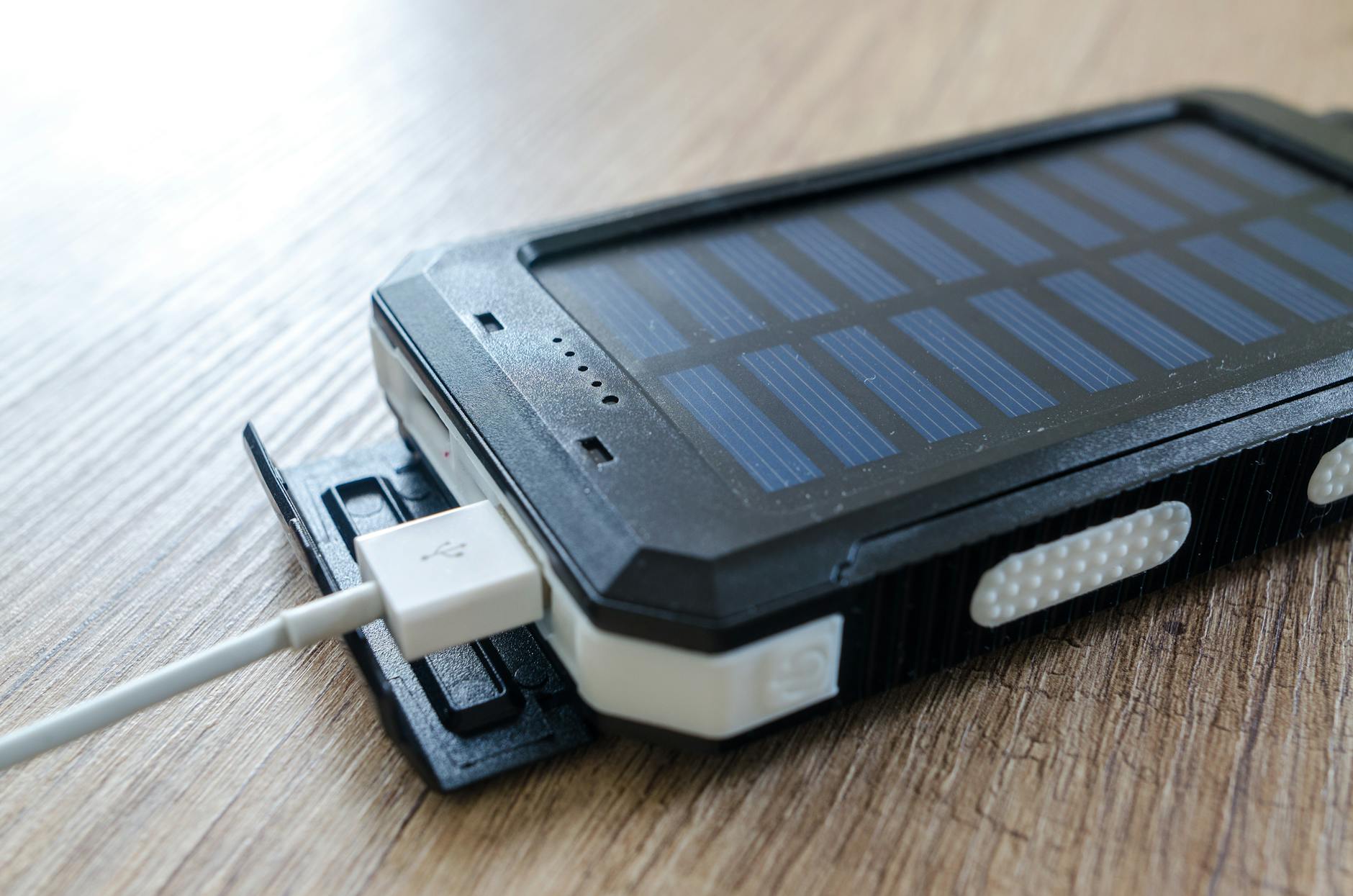
Most people only think about their power bank when they desperately need it, only to find it dead or draining faster than expected. Like any lithium battery device, a power bank has a finite number of charge cycles, and how you treat it between those cycles determines how many good years you get out of it. A few consistent habits can genuinely double the useful life of your device, saving you money and keeping you connected when it matters most.
This article is part of our complete guide: Power Banks Best Prices.
How To Maintain Power Bank Battery Life: Why Power Bank Maintenance Matters
Lithium-ion cells are the engine inside every power bank, and they degrade a little with each charge cycle by default. Heat, deep discharges, and poor storage conditions accelerate that degradation well beyond the natural rate. Understanding how to maintain power bank battery life is not complicated, but it does require a small amount of daily intention. A power bank that is properly cared for will still deliver close to its rated capacity after two or three years of regular use. One that is neglected may feel sluggish or unreliable within six months. The good news is that the habits involved are simple and cost nothing to adopt.
A well-maintained power bank is one you can count on during a long matatu ride, a day out in the field, or a power outage at home. Reliability comes partly from the quality of the unit itself and partly from how the owner treats it. Power banks built with multi-protection features, like the ones we carry, are already engineered to handle minor electrical stress. Pairing that engineering with good user habits creates a genuinely durable setup. Think of it the way you think of a good pair of shoes: the quality gets you started, and the care keeps them going. Extending your power bank's lifespan also means fewer devices ending up in a landfill, which is a real benefit beyond the personal savings.
Optimal Charging Habits for Battery Health
One of the fastest ways to shorten a lithium battery's life is to routinely drain it to zero before recharging. The cells experience significant stress at very low voltage, and repeated deep discharges erode capacity faster than almost any other habit. A practical rule is to plug in your power bank when the indicator shows around 10 to 20 percent remaining. This keeps the cells operating in a mid-range voltage zone where they are most stable. It might feel counterintuitive if you grew up with older nickel-cadmium batteries that needed full discharge cycles, but lithium chemistry works differently. Partial charges are not just acceptable for lithium cells; they are actively better for long-term health.
Leaving your power bank plugged in after it reaches 100 percent is another habit worth breaking. Most modern units have circuitry that stops active charging at full capacity, but trickle current and residual heat still accumulate over long sessions. Unplugging promptly when the charge is complete removes that low-level stress from the equation. If you charge overnight occasionally, it will not ruin the device, but making it your daily routine adds up over months. Set a reminder if you need to, or simply charge your power bank during the day when you can keep an eye on it. A little attention at charging time translates directly into more cycles over the device's lifetime.
Using the correct charger matters more than most people realize. A poorly made or uncertified adapter can deliver inconsistent voltage, which stresses the battery's protection circuits even when those circuits do their job correctly. Whenever possible, use the cable and adapter that came with your power bank, or a certified replacement of the same specification. Cheap unbranded chargers are a false economy when they quietly shorten the life of a device you paid good money for. This is especially relevant for high-capacity units like 50000mAh power banks, where the charging current involved is higher and voltage consistency is more critical. Certified accessories protect both the power bank and whatever device you are charging from it.
Fast charging is convenient, but it generates more heat than standard charging, and heat is consistently the biggest enemy of lithium battery longevity. When time allows, choose a lower-amperage charging method and let the power bank fill up more slowly. You will notice the unit stays cooler to the touch, which is a reliable sign that the cells are under less stress. Keeping charging sessions under eight hours is a good general guideline, particularly for very large capacity units that take longer to fill. If your charger and power bank both support fast charge but you are not in a hurry, plugging into a slower port is a completely valid choice. Small decisions like this, repeated consistently, add up to measurably longer battery life.
Best Storage Conditions for Long-Term Use
Proper power bank storage temperature is one of the most overlooked factors in battery health, especially in Kenya where temperatures inside parked vehicles or direct sunlight can reach extreme levels. Lithium cells perform best and degrade most slowly when stored between 15 and 25 degrees Celsius. Above that range, the chemical reactions inside the cells accelerate in ways that permanently reduce capacity. Below freezing, the cells can be damaged by voltage instability during discharge. A cool, shaded room or a desk drawer away from windows is genuinely one of the best places you can keep your power bank. The environment you store it in is just as important as how you charge it.
If you plan to set aside a power bank for several weeks or months without using it, store it at between 40 and 60 percent charge rather than full or empty. A fully charged lithium cell stored for a long time experiences a form of stress called high-voltage aging, while an empty cell risks falling below the minimum voltage threshold needed to recover safely. The 40 to 60 percent range keeps the chemistry in a stable, low-stress state. Before you store the device, take two minutes to charge it to around half capacity if it is not already there. Mark your calendar to check on it monthly, and top it back up to 50 percent if it has drained below 20 percent. This simple routine preserves the battery in a way that makes it feel almost new when you bring it back into regular use.
Hot vehicles are one of the most common sources of heat damage for power banks in Nairobi and other Kenyan cities. Leaving a power bank on a car seat or in the boot during a warm afternoon can push internal temperatures well above 40 degrees Celsius, which accelerates cell degradation significantly. The same applies to storing a power bank in a sealed bag left in direct sunlight, or on a windowsill, or near a cooking area. Keeping your power bank in a bag with good airflow, stored in the shade, is a simple precaution with a real impact. If you travel frequently, treat your power bank the way you would treat a tube of sunscreen: keep it out of the heat wherever possible. Your battery will thank you with reliable performance over a much longer period.
Signs Your Power Bank Needs Attention
A sudden drop in how long your power bank lasts between charges is one of the earliest and clearest warning signs that the battery cells are aging faster than expected. If a unit that once charged your phone three times now struggles to reach two full charges, the capacity has measurably declined. This can happen gradually over a long period of normal use, or it can happen quickly if the power bank has been exposed to heat or repeated deep discharges. Tracking your power bank's performance loosely over time helps you notice the change before it becomes a problem in the field. Capacity loss after one or two years of daily use is normal, but sharp drops in the first few months suggest a problem worth investigating. Catching it early gives you options.
Unusual heat during charging or during use is a signal that something inside the power bank is working harder than it should. Some warmth is normal, particularly when charging at high current, but a unit that becomes genuinely hot to hold is outside the expected range. Overheating can be caused by a failing cell, a faulty protection circuit, or using an incompatible charger. If you notice this consistently, stop using the power bank until you can have it checked. A power bank that runs hot is not just losing capacity; it is a potential safety concern. Acting on the warning signs early protects both your devices and your safety.
Physical damage to the casing or charging ports affects more than appearances. A cracked port may create intermittent connections that force the charging circuit to restart repeatedly, adding unnecessary stress to the battery. Debris in the ports can cause similar problems, along with slower charging speeds that are easy to mistake for battery decline. Checking the ports and casing regularly as part of your routine takes less than a minute and can help you catch small issues before they become larger ones. Keeping connectors clean and dry is a basic but effective maintenance step. A power bank in good physical condition is one that can deliver its full electrical performance consistently.
How Quality Power Banks Protect Your Investment
CE, FCC, and RoHS certification are not just regulatory checkboxes; they represent real testing requirements that a power bank must pass before it earns those marks. CE certification covers electrical safety and electromagnetic compatibility for the European market, FCC covers radio frequency standards for the US market, and RoHS restricts the use of hazardous materials in the device's construction. A power bank that carries all three certifications has been independently verified to meet meaningful safety and quality standards. This matters in practical terms because it means the components inside are sourced and assembled to a defined specification, rather than whatever was cheapest on a given production run. When you buy a certified unit, you are not taking the manufacturer's word for quality; you are buying something that has been tested. That distinction is worth paying for.
Multi-protection features inside a quality power bank do a lot of quiet work to keep your device healthy. Overcharge protection cuts off current when the cells reach full capacity, preventing the high-voltage stress that degrades batteries quickly. Over-discharge protection stops the output before the cells drop to a dangerously low voltage. Temperature protection monitors heat and reduces or stops charging if conditions become unsafe. Short-circuit protection prevents sudden current surges from damaging connected devices. These systems work automatically, but they work best when combined with the kind of good charging habits described earlier in this post.
Our one-year warranty on power banks is designed to give you genuine peace of mind, not just a piece of paper. Manufacturing defects in batteries or circuits can sometimes take weeks or months to become apparent under normal use conditions. A warranty that covers that period means you are not left paying out of pocket if a genuine fault appears after your first few months of use. A-grade batteries are selected specifically for consistent cell chemistry and a longer rated cycle life, which means the unit you buy is built from the start to outlast cheaper alternatives. Buying from a retailer who stands behind the product with a real warranty is part of how you protect your investment from day one. You can explore our full range at our online store to find the right capacity and features for your needs.
Quick Daily Habits That Make a Difference
Keeping your power bank physically separated from your phone when both are charging is a small habit with a real payoff. Phones generate heat during charging, and placing a power bank directly against a warm phone traps that heat between the two devices. Both batteries then operate at a higher temperature than they would individually, which accelerates degradation in both. Give each device a few centimeters of space and some airflow when they are plugged in. In a hot environment like a car or a small office without air conditioning, this simple spacing makes a measurable difference. It costs nothing and takes no extra time once it becomes routine.
Avoiding the use of your power bank while it is charging, sometimes called pass-through charging, is worth the occasional inconvenience. Many power banks support pass-through, but using the feature regularly forces the battery to simultaneously receive and deliver current, which generates more heat and puts more stress on the protection circuits than normal charging does. Reserving this feature for genuine emergencies keeps the battery in better condition over time. Cleaning the charging ports gently with a dry cloth every few weeks removes dust and debris that can cause connection problems. If you notice the charge declining sharply after a year or more of heavy daily use, that is a reasonable point to consider a replacement rather than pushing a depleted battery further. Treating your power bank as a maintained tool rather than a disposable item is the mindset that gets the most out of it.
The habits covered in this post are not demanding, and most of them take only a few seconds of attention. Charging before the battery is fully depleted, unplugging when full, storing in a cool place at partial charge, and keeping connectors clean are all actions that quietly compound into a much longer and more reliable device lifespan. If you are looking for a power bank that is already built for durability and backed by a warranty, browse our selection or visit us at Mountain Mall on Thika Road in Nairobi. A quality device paired with good habits is the combination that keeps you powered up reliably, for years rather than months.
See everything powerbanks.africa can do for you.
Visit powerbanks.africa →