Built-In Cable Power Banks: When Convenience Costs You Durability
Built-in cable power banks promise convenience but sacrifice durability. In Kenya's dusty, humid climate, integrated cables fail within 6–12 months due to concentrated mechanical stress, while detachable cables remain replaceable and cost-effective. Choosing a removable cable preserves your battery investment and adapts to future phone standards.
See everything powerbanks.africa can do for you.
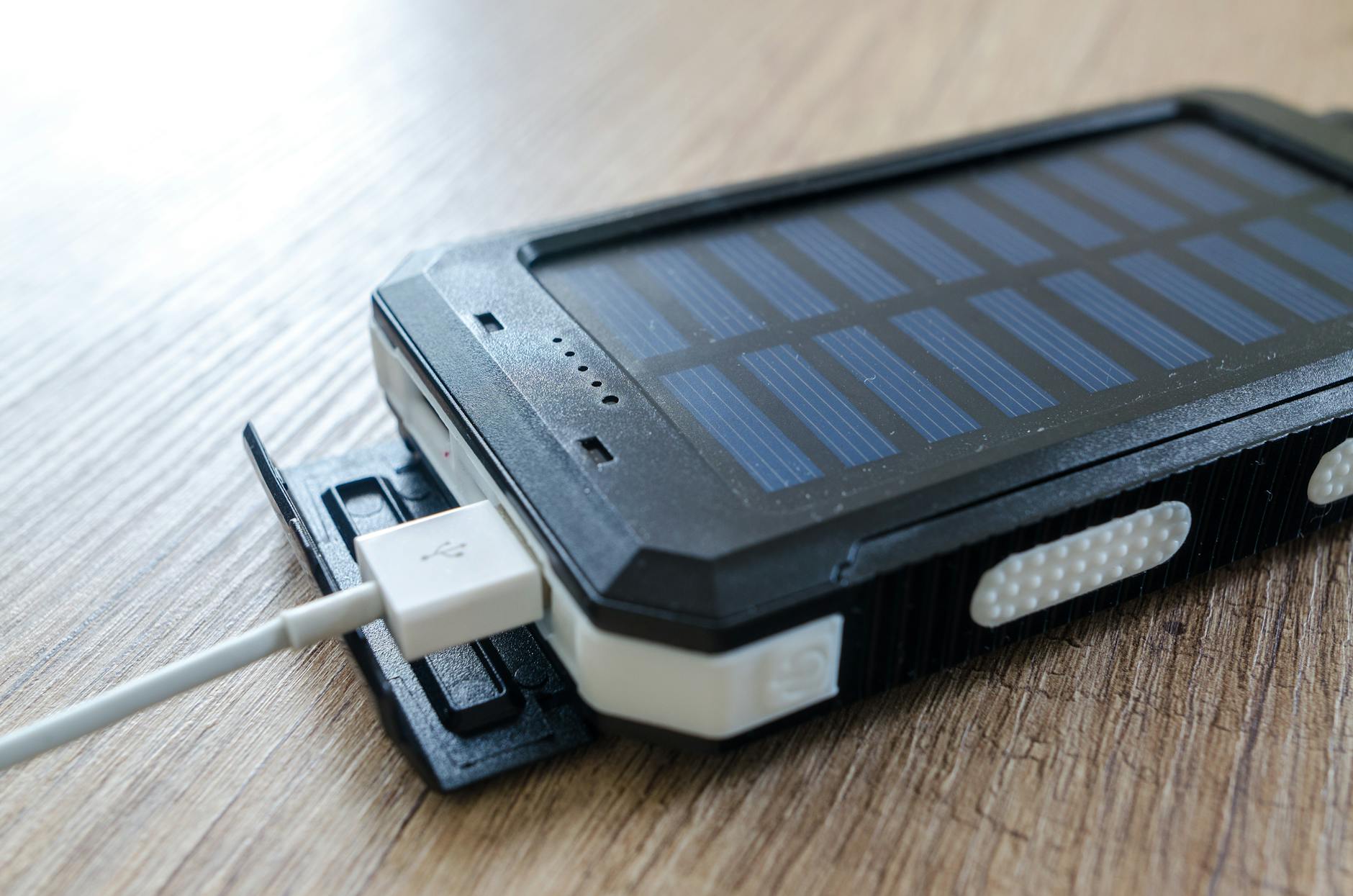
If you've ever pulled a dead phone from your pocket at the worst possible moment, you understand why the idea of a power bank with a built-in cable feels so appealing. No rummaging through a bag for the right cable, no forgetting it on your desk before a long commute. The pitch is simple and the logic seems sound. But after helping Kenyan customers across Nairobi and nationwide choose power banks that actually last, we've noticed a pattern worth talking about honestly.
This article is part of our complete guide: Power Banks Best Prices.
Power Bank With Built In Cable Kenya: Why Built-In Cables Sound Better Than They Are
For a busy professional commuting along Thika Road or a traveler passing through Jomo Kenyatta International Airport, one less cable to carry genuinely sounds like a win. The mental load of packing matters, and anything that reduces it gets attention. Built-in cable designs lean hard into this promise, presenting a single device that does everything without extra accessories. Marketing for these products emphasizes the all-in-one story at every turn, from product photos to packaging copy. What that marketing rarely shows is the device six months later after daily use in a pocket, a bag, or a glove compartment. Real-world use in Kenya's conditions, including dusty roads, humid coastal weather, and long hours away from a socket, tells a different and less convenient story.
The Convenience Illusion
The appeal is strongest at the point of purchase, which is exactly when it is easiest to overlook long-term trade-offs. A customer browsing options in a Nairobi electronics shop sees a tidy, self-contained unit and imagines the relief of never hunting for a cable again. That feeling is real, and we do not dismiss it. What changes the picture is lived experience: the cable that gets tugged, folded, and stuffed into pockets hundreds of times over a year. By the time the fraying starts, the purchase is long past its return window and the convenience has quietly disappeared.
The Durability Problem With Integrated Cables
The fundamental issue with an integrated cable power bank is physics, not branding. Because the cable is permanently attached, the connection point at the cable's base absorbs stress every single time you plug in, adjust your grip, or shift the device in your pocket. Engineers who study connector fatigue note that permanently attached cables experience roughly ten times the mechanical stress of a removable plug, simply because there is no break point that can absorb movement and then be replaced cheaply. When that solder joint or strain relief fails, you cannot swap the cable for a fresh one. The entire power bank becomes useless, even if the battery inside still holds a full charge. Most integrated cables in budget and mid-range units begin showing fraying or intermittent connections within six to twelve months, well before a quality A-grade battery would ever reach the end of its working life.
How Kenya's Environment Makes It Worse
Conditions here put extra pressure on cable integrity in ways that temperate-climate product testing does not always account for. Dust from unpaved roads works into the cable's strain relief point and accelerates cracking of the outer sheath. Humidity along the coast and in lakeside towns promotes corrosion at the connector tip, shortening the time before the connection becomes unreliable. Heat inside a car parked in the sun along Mombasa Road softens the cable's insulation and makes the copper strands inside more brittle over time. These are not edge cases for Kenyan users; they are everyday realities. A cable that might survive two years in a mild European climate can fail in eight months under these conditions, which makes the durability argument against built-in cables even stronger locally.
Why Detachable Cables Win in the Long Run
A detachable cable costs between two hundred and five hundred shillings to replace, while a decent power bank costs two thousand shillings or more. Choosing a power bank with a standard port means you are distributing the wear across a series of inexpensive, replaceable accessories rather than concentrating it on one permanent and irreplaceable connection. When USB-C becomes the universal standard and older cable types fade out, your power bank does not become obsolete because you simply buy the cable that fits your new phone. The A-grade battery cells inside a well-built unit can realistically handle five hundred full charge cycles or more, which translates to well over a year of daily use without significant capacity loss. Protecting that battery investment by keeping the cable separate is straightforward common sense, not a technical detail only engineers need to consider.
The Cable Replacement Maths
Consider a power bank purchased for around three thousand shillings. If the built-in cable fails at month eight, you have lost the entire investment even though the battery still works. With a detachable cable setup, you spend three hundred shillings on a replacement cable and carry on without interruption. Over two years, the detachable approach almost always costs less in total, charges your devices more reliably, and adapts to new phone models as your household upgrades. That arithmetic matters to families and small business owners stretching their electronics budget carefully, and it is one of the clearest ways to frame the integrated cable power bank pros and cons before you commit to a purchase.
Real Convenience: What Actually Matters
Convenience is not about the first week of ownership. It is about whether the device still works reliably on a random Tuesday eighteen months after you bought it. A power bank with a built-in cable feels innovative and tidy when it is new, but durability is what earns the name "convenient" over a two-year ownership period. Detachable cable power banks take up the same space in a pocket or bag, so the size argument does not hold up in practice. What genuinely matters for travel and daily use is confidence: knowing the device will charge your phone when you need it, without inspecting the cable for fraying first.
Protection Features Matter More Than Cable Style
Multi-protection features, including overcharge protection, short-circuit protection, and temperature control, are far more meaningful to daily reliability than whether the cable is attached or detachable. Our CE, FCC, and RoHS certified units are built around those protections precisely because they extend the working life of both the power bank and the device being charged. When a matatu suddenly surges with voltage or a power strip at a shared office delivers an irregular current, these safeguards protect the battery cells and, by extension, your phone. No built-in cable, however tidy it looks in a product photo, offers anything close to that level of long-term value. Prioritizing certifications and cell grade over cable style is the decision that pays off month after month.
Understanding the Trade-Off Before You Buy
Weighing the integrated cable power bank pros and cons honestly means separating the appeal of novelty from the reality of daily use. A built-in cable offers genuine convenience for perhaps the first few weeks, when the cable is still supple and the connection is tight. After that, the trade-off becomes increasingly unfavorable: a fixed point of failure that cannot be swapped, a device whose entire value collapses when one small component wears out, and a design that cannot adapt when your phone's charging standard changes. Most customers who think carefully about this trade-off choose a standard-port power bank and a good cable, and they do not look back. The ones who regret their purchase almost always bought the built-in cable version because it photographed well online.
What Frequent Travelers Should Know
If you travel regularly between Nairobi, Kisumu, Mombasa, or smaller towns, your power bank takes real punishment. It goes into overhead lockers, bounces in backpacks on rough roads, and gets pulled out and put away dozens of times a week. Under those conditions, a built-in cable accumulates stress at the base connector far faster than a cable used at a desk. Travelers also tend to charge multiple devices with different cable types, which a single built-in cable cannot accommodate. Carrying one power bank with two standard ports and two different cables gives you more flexibility and more resilience for the same or lower total cost.
What We Recommend Instead
When a customer asks us about a power bank with built in cable Kenya suppliers commonly stock, our honest answer is to look carefully at what you are actually buying. A built-in cable is a convenience feature that trades long-term reliability for short-term tidiness, and most users regret that trade within a year. Instead, choose a power bank with a standard USB-C or USB-A output port, buy a quality two-metre cable to keep in your bag permanently, and you have solved the convenience problem without accepting the durability risk. Look for one-year warranty coverage and A-grade battery cells, both of which are standard across the power banks we stock, because those two factors predict whether a unit will still perform well after heavy use.
How to Spot a Quality Unit
Certified testing under CE, FCC, and RoHS standards is not a marketing checkbox. It means the unit has been independently verified to protect your expensive smartphone from the electrical irregularities that damage batteries over time. Beyond certification, check that the product description specifies A-grade cells rather than simply listing a capacity figure, because capacity numbers alone say nothing about how many cycles the battery will complete before losing significant performance. A one-year warranty backed by a local supplier who can actually be reached matters far more than a two-year warranty from a seller with no address in Kenya. These details separate a power bank that lasts from one that spends its final months sitting in a drawer, too unreliable to trust but too recent to feel comfortable replacing.
Integrated cables will keep appearing on shelves because they photograph well and write well in product descriptions. But the customers who come back to us satisfied are almost always the ones who chose reliability over novelty. If you want a power bank that is still earning its keep two years from now, browse our full range and look for the specs that actually matter: cell grade, warranty, certification, and a port that accepts the cable you decide to carry.
See everything powerbanks.africa can do for you.
Visit powerbanks.africa →