Best Power Banks for Kenya's Power Cuts: A Buyer's Guide
Kenya's frequent power cuts make quality power banks essential for productivity and safety. Choose 20000-30000mAh for everyday use or 50000mAh for households and remote workers. Prioritize multi-protection circuitry, certified components, and LED features to handle tropical climate and voltage fluctuations. Avoid counterfeits; invest in verified, durable units available in Nairobi.
See everything powerbanks.africa can do for you.
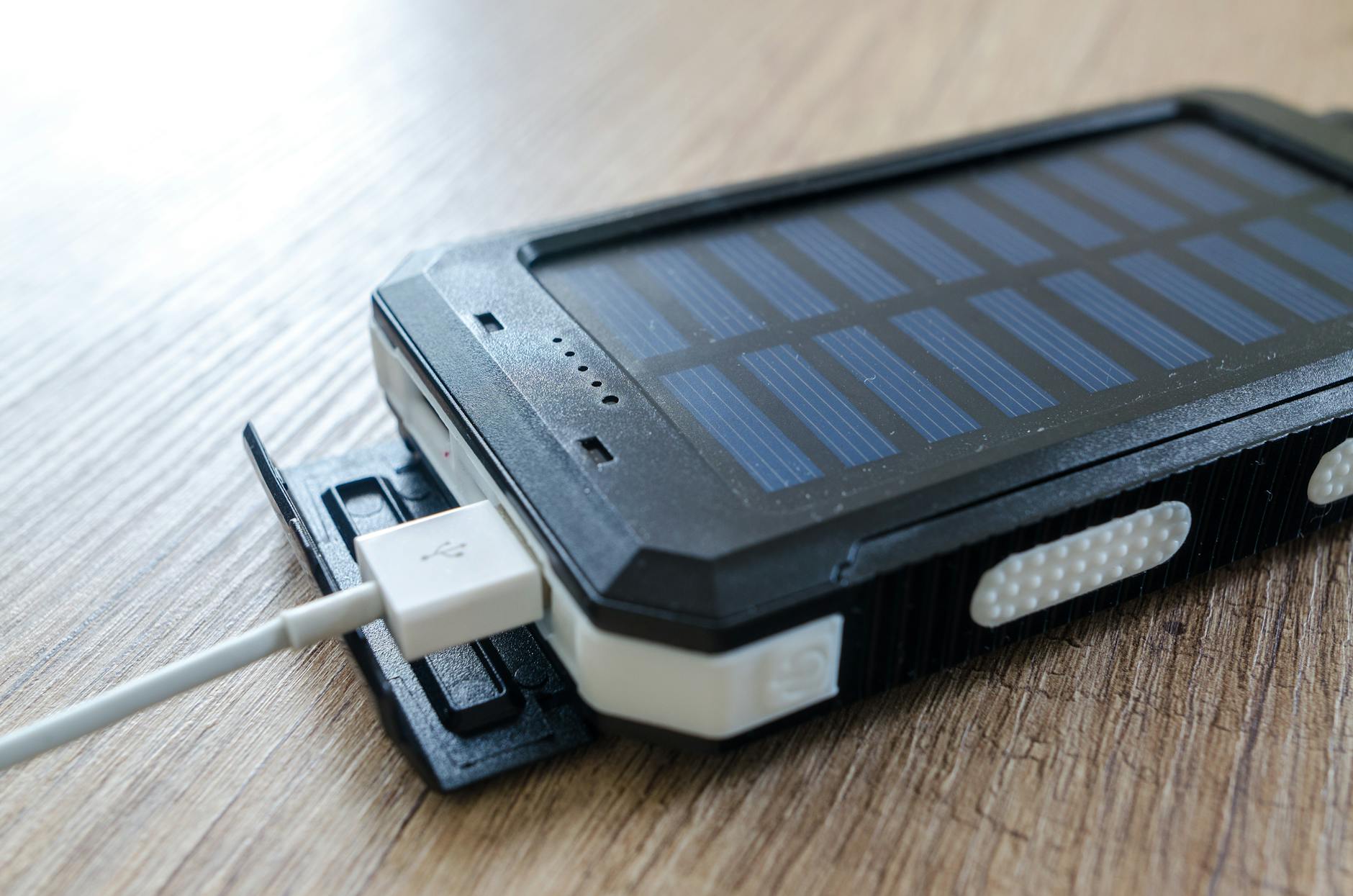
If you live or work in Kenya, you already know the drill: the lights go out, your phone battery starts draining faster than you'd like, and that important call or deadline does not wait for Kenya Power to restore the grid. A quality power bank is no longer a luxury for Kenyan households and remote workers. It is practical insurance against lost productivity, missed communications, and the genuine inconvenience of being caught unprepared during a scheduled outage.
This article is part of our complete guide: Power Banks Best Prices.
Best Power Banks Kenya: Why Load Shedding Makes a Quality Power Bank Essential
Kenya's scheduled power cuts can last anywhere from a couple of hours to most of the working day, leaving your phone, laptop, and other work devices without a charge source. For anyone running a home office or managing clients on their phone, that downtime translates directly into lost income. A dependable backup power source keeps you online for video calls, mobile banking, and the kind of communication that simply cannot wait. Beyond work, having backup power during an outage is a safety consideration, keeping you reachable in emergencies. The best power banks Kenya has available are not all created equal, though, and choosing poorly means you may find yourself with a flat backup battery right when you need it most. Investing in the right unit from the start saves you real money and frustration.
Power quality across Kenya also varies significantly depending on your location and the state of local infrastructure. Voltage fluctuations and irregular current can be hard on cheaply made batteries, causing them to degrade or even fail prematurely. A power bank built with certified components and multi-protection circuitry handles those fluctuations without internal damage. Counterfeit units with low-grade cells may advertise impressive capacity figures but deliver a fraction of that in practice. Spending a little more on a unit with verifiable certifications protects both your devices and your money over the long term. The difference becomes very clear after the third or fourth outage in a month.
Capacity Guide: How Much Power Do You Actually Need During Load Shedding?
Choosing the right capacity is the most important decision you will make when selecting a power bank, because too small a unit leaves you stranded and too large a unit may be impractical to carry. A power bank in the 20000mAh to 30000mAh range handles everyday use comfortably, covering a daily commute and topping up your phone once or twice through a short outage. Most modern smartphones hold between 4000mAh and 5000mAh, so a 20000mAh unit gives you roughly three to four full charges after accounting for conversion losses. That is enough for a single person managing a standard outage of a few hours. If you are also powering earbuds, a smartwatch, or a small Bluetooth speaker, a 25000mAh unit gives you the headroom to cover all of those without rationing. For single-device users with predictable, short outages, this range is the practical sweet spot.
For multi-day outages, larger households, or remote workers who depend on several devices, a 50000mAh power bank is a genuinely different category of product. At that capacity, you can charge a smartphone six to eight times, top up a tablet, and still have reserve power left over. Families sharing one unit during an extended outage will appreciate not having to negotiate over the last ten percent. Power banks for load shedding at this capacity level are particularly useful in areas outside Nairobi where grid restoration can take longer than expected. The trade-off is weight and size, so consider how often you carry the unit versus how often it sits at home as a household backup. If it mostly stays on a desk, the extra bulk is a reasonable exchange for the peace of mind.
LED Light Features: A Practical Bonus
Some 50000mAh power banks include built-in LED lights, and in the context of Kenyan power cuts that feature earns its place. A bright LED built into your power bank means you have a torch available the moment the lights go out, without hunting for a separate device or draining your phone's camera flash. Evening outages in particular become far less disruptive when you have immediate, hands-free light. It is a small addition that reflects how these products are designed with real outage scenarios in mind.
Essential Features to Look For in a Kenya-Ready Power Bank
Multi-protection circuitry is not marketing language. It refers to real electronic safeguards that prevent overcharging, short circuits, over-discharge, and overheating, all of which are genuine risks in Kenya's tropical climate. Without these protections, a battery exposed to high ambient temperatures can degrade rapidly or, in worst-case scenarios, become a fire hazard. A well-built power bank monitors internal temperature and current continuously, cutting off charging or discharging when readings move outside safe limits. This kind of circuitry adds to the manufacturing cost, which is part of why certified units cost more than street-market alternatives. For everyday Kenyan use, it is non-negotiable.
Certification marks tell you something concrete about a power bank before you even switch it on. CE certification confirms compliance with European safety standards, FCC certification covers electromagnetic compatibility, and RoHS certification means the unit does not contain restricted hazardous substances. A power bank carrying all three has been through independent testing, not just the manufacturer's own claims. Counterfeit batteries sold in Nairobi's informal electronics markets often carry printed certification logos that have no backing documentation. Always ask for or verify certification paperwork when purchasing, especially online. A-grade battery cells paired with genuine certifications are the foundation of a power bank that will still be performing well a year from now.
Built-in cables are a convenience feature that matters more than it might first appear. When you are scrambling during an outage to charge your phone, not needing to locate a separate cable saves time and reduces the chance of using a low-quality cable that restricts charging speed. Some units include both built-in cables and standard output ports, giving you flexibility for different devices. Fast-charging support, typically through USB-C Power Delivery or Qualcomm Quick Charge protocols, means your phone reaches a usable percentage quickly during the window when grid power returns. For people who top up their phones between outages rather than charging overnight, fast charging is a practical daily convenience. Choosing a unit that supports your specific phone's fast-charge standard ensures you get the full benefit.
Power Bank Performance in Kenya's Climate and Conditions
Nairobi sits at roughly 1,700 metres above sea level, which moderates temperatures compared to coastal cities, but the rest of Kenya includes hot and humid environments that are genuinely hard on battery cells. Lithium-ion batteries lose capacity faster when stored or operated at high temperatures, and units made with lower-grade cells feel that effect first. A power bank constructed with quality materials and proper thermal management holds its rated capacity more consistently across Kenya's range of climates. If you are based in Mombasa, Kisumu, or any of the hotter inland towns, thermal performance is a factor worth thinking about specifically. Paying attention to operating temperature ranges listed in a product's specifications is a useful starting point. Durable construction is about more than the outer casing.
Real-world capacity from any power bank runs below the rated figure because of conversion losses during charging and discharging, and Kenya's ambient heat nudges that figure further. In practical terms, expect around 85 to 90 percent of the rated capacity to be actually available to your devices. That means a 50000mAh unit delivers the equivalent of roughly 42000mAh to 45000mAh of usable energy under typical conditions. This is not a defect. It is physics, and reputable manufacturers factor it into their specifications honestly. Knowing this, it makes sense to choose a capacity slightly above your minimum calculated need rather than shopping to an exact number. A one-year warranty from a manufacturer reflects genuine confidence that the product will perform through normal use in conditions like Kenya's.
Commuters travelling Nairobi's matatu routes or making longer journeys upcountry need a power bank that balances capacity with portability. A 20000mAh unit typically weighs around 400 to 500 grams, which is manageable in a work bag. A 50000mAh unit is heavier and closer to the size of a small book, making it better suited as a home or office backup than a daily carry item. If you need both, some households keep a compact unit for the commute and a high-capacity unit at home for extended outages. Understanding how and where you will use your power bank helps you make a practical choice rather than buying on capacity figures alone. The right unit is the one you actually have with you when the lights go out.
Making the Most of Your Power Bank During Extended Outages
The single most effective habit you can build around owning a power bank is charging it before a scheduled outage rather than after the fact. Kenya Power publishes load shedding schedules, and checking them the evening before gives you time to top up your unit overnight. Starting an outage with a full power bank rather than a half-charged one doubles your effective backup time without any additional cost. It is a straightforward routine that takes about ten seconds to set up as a phone reminder. Many people charge their power bank reactively, plugging it in once the power returns, which means the next outage often finds them at partial capacity. Shifting to proactive charging is the simplest upgrade you can make to your backup power strategy.
Using airplane mode on your phone during an outage is a widely recommended tip that genuinely works. When your phone's cellular radio constantly searches for signal, particularly in areas with weaker network coverage, it draws significantly more power than it would during normal connected use. Switching to airplane mode and enabling Wi-Fi only, or stepping outside briefly to check messages and then returning to airplane mode, can extend your phone's battery life by thirty to fifty percent. That stretches each charge cycle from your power bank further, effectively giving you more total uptime from the same capacity. Combine this with lowering screen brightness and closing background applications, and a single charge can last considerably longer than expected. Small habits compound over a long outage.
Storage conditions affect your power bank's long-term health more than most people realise. Keeping your unit in a cool, dry place away from direct sunlight preserves the battery cells and slows the natural degradation that all lithium-ion batteries experience over time. Avoid leaving your power bank in a parked car during the day, where temperatures can climb well above 40 degrees Celsius and cause irreversible capacity loss. If you are storing the unit for more than a few weeks without use, charge it to around 50 to 60 percent rather than leaving it fully charged or fully flat. A quality power bank maintained with reasonable care will typically deliver reliable performance for two to three years of daily use. That lifespan makes the upfront cost of a certified, well-built unit a sound investment by any measure.
Where to Find Certified, Durable Power Banks in Kenya
Buying from a retailer that can show you certification documentation and provide a written warranty is the clearest way to avoid counterfeit products. In Kenya's electronics market, both online and offline, imitation power banks with fabricated capacity ratings are genuinely common. A retailer willing to answer questions about battery grade and certification is demonstrating transparency that a street vendor typically cannot match. Warranty documentation matters practically: a one-year warranty is only useful if the business selling you the product will still be reachable when you need to use it. Established retailers with a physical presence have accountability that anonymous online listings do not. That accountability is part of what you are paying for when you choose a reputable source.
Before finalising any purchase, check the unit physically or through product documentation for CE, FCC, and RoHS markings, and ask whether those certifications are verifiable. A genuine certification mark is backed by a certificate number that can be cross-referenced. Counterfeit units often reproduce the logos without the underlying compliance. For anyone buying the best power banks Kenya has available for serious use during load shedding, this verification step protects your devices as much as your investment. It takes a few minutes and removes a significant source of risk. Browse our range of certified power banks to see specifications and certification details clearly listed for each model.
You can visit us in person at Mountain Mall on Thika Road in Nairobi, where our team can walk you through the options and help you match a unit to your actual usage needs. If you are not in Nairobi, we deliver nationwide across Kenya, so getting a quality, warranted power bank to your door is straightforward wherever you are based. Genuine power banks with A-grade cells and multi-protection circuitry cost more at the point of purchase than the cheap alternatives, but they consistently outlast them by months or years. Over the lifespan of the product, that price difference narrows quickly and often reverses entirely. Buying once and buying right is almost always the more economical choice in the long run.
The right power bank turns a load shedding event from a disruption into a minor inconvenience. Once you know what to look for and how to use your unit well, staying connected and productive through Kenya's power cuts becomes a problem you have already solved.
See everything powerbanks.africa can do for you.
Visit powerbanks.africa →